
Civilian casualties in Ukraine rise amid intensifying fighting – UN report

As the fourth anniversary of the full-scale Russian invasion of Ukraine approaches, civilians face almost daily attacks and growing hardship, according to a report released on Tuesday, December 9, by the UN Human Rights Office.
"Our findings establish several worrying trends: rising civilian casualties in both frontline and urban areas, sustained attacks on energy infrastructure, and continued patterns of systematic and widespread torture and ill-treatment of Ukrainian prisoners of war and civilian detainees," Danielle Bell, who heads the Human Rights Monitoring Mission in Ukraine (HRMMU), said.
Thus, it is noted that between June and November 2025, the number of civilian casualties increased significantly in both frontline and urban areas. July became the month with the highest number of civilian deaths and injuries since April 2022. On November 19, a massive combined drone and missile strike killed at least 36 civilians in Ternopil, the deadliest attack in western Ukraine since the start of the full-scale invasion.
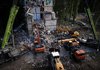
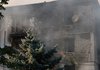
Living conditions in frontline regions have deteriorated sharply. Close-range drones, aerial bombs, and other types of munitions have caused widespread destruction of residential buildings and other vital civilian infrastructure. This has effectively rendered some of these areas uninhabitable and triggered new waves of population displacement. In a number of frontline cities, many hospitals and clinics have been destroyed or closed, leaving residents without access to basic medical care. Water, heating, and electricity outages have further limited the ability of civilians, especially the elderly and disabled, to remain in their homes. In October and November 2025, Russia carried out eight large-scale coordinated attacks using missiles and drones targeting Ukraine's energy system. These strikes caused emergency power outages and daily power cuts in many regions, with planned outages lasting up to 18 hours a day. Some areas experienced prolonged water and heating outages, lasting from several hours to several days.
Between May and August 2025, Ukraine and the Russian Federation conducted the largest prisoner exchanges since 2022, but the HRMMU did not record any improvement in the treatment of internees.
"Systematic and widespread torture and ill-treatment of POWs is one of the most shocking and pervasive features of this war. Of the 187 Ukrainian POWs recently freed by the Russian Federation, 185 provided accounts of severe beatings, stress positions, electric shocks, suffocation and dog attacks. 141 (75 percent) disclosed having been subjected to sexual violence. Interviewees also described harsh conditions of detention, limited medical care, and violence occurring during capture, transfer, admission to new facilities, and throughout internment," Belle said.
The HRMMU interviewed 137 prisoners of war in Ukrainian captivity, including ten third-country nationals. More than half of them, including 37 prisoners of war captured this year, reported torture and ill-treatment during interrogation or transport before arriving at official internment sites. The HRMMU continues to have unhindered access to places of detention and continues to document internment conditions that are generally in line with international standards.
The report also highlights the increasing number of extrajudicial executions of prisoners of war. At least four cases of the killing of ten Ukrainian servicemen after capture by Russian forces were found to be credible. There were also four executions of Russian prisoners of war by Ukrainian soldiers, as well as credible accounts of three additional incidents that are currently being investigated.
In the territory of Ukraine occupied by Russia, the occupying authorities continued to implement measures that violate international humanitarian law. The report describes increasing restrictions on freedom of movement, expression, religion and access to independent information. Civilians faced increasing pressure to obtain Russian citizenship, while daily life without a Russian passport became almost impossible. The report describes arbitrary arrests, persecution for criticizing the "special military operation," the use of forced confessions and the application of retroactive criminal legislation.
Private property rights were also severely violated. The occupation authorities continued to apply legislation allowing the expropriation of Ukrainian residential property deemed "abandoned." As of November 2025, at least 5,557 houses in Donetsk and Luhansk regions had been registered as such and transferred to municipal ownership. Ukrainians who had moved to government-controlled territory reported being unable to participate in legal proceedings necessary to confirm their status and retain ownership of their property.
Access to water deteriorated further in some areas of the occupied Donetsk region, where declining water levels in reservoirs and dilapidated or damaged infrastructure necessitated the introduction of water rationing. In some settlements, water was supplied only once every few days. Many families reported poor water quality and high costs associated with purchasing drinking water.
The report also notes the efforts of the Ukrainian authorities and humanitarian organizations to support civilians affected by the fighting, including large-scale evacuations, the establishment of transit centers, and the provision of medical, psychosocial, and legal assistance, despite extremely difficult and increasingly dangerous conditions, including attacks on humanitarian workers and UN convoys.