

International Liberty Institute has presented its Economic Security Index 2025: Ukraine remains in the “orange zone” of risk
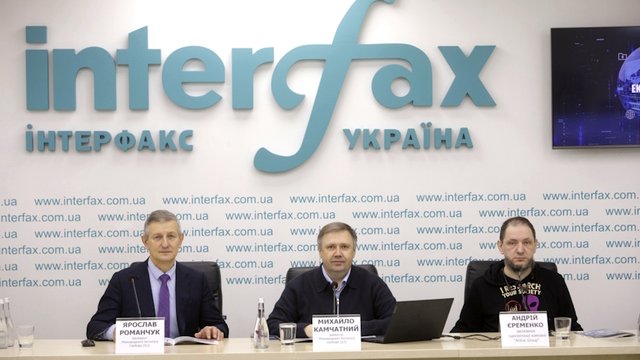
The International Liberty Institute presented the updated 2025 Economic Security Index in Kyiv, according to which Ukraine, with a total score of 33.4 out of 100 possible, continues to remain in the “orange” zone of elevated risks; the result is somewhat worse than last year’s figure of 35.2 points.
President of the International Liberty Institute Yaroslav Romanchuk explained that the index is based on 60 indicators grouped into eight blocks — from the quality of legal and institutional frameworks and macroeconomic policy to the regulatory environment, social factors, intangible assets, and infrastructure.
“Our Economic Security Index is, in essence, a matrix for the head coach of Team Ukraine in the economy: it shows where the country is vulnerable, where it has reserves, and which specific indicators should be strengthened in order to move into the green safety zone,” he said at a press conference at the Interfax-Ukraine news agency on Wednesday.
According to Romanchuk, the methodology of the index defines four levels of economic security: the red zone (lowest indicator values), two intermediate groups, and the green zone, which corresponds to the level of countries with developed institutions and resilient economies. The green group, in particular, includes Finland, Germany, Israel, and the United States, which demonstrate results above 70 points out of 100.
“Since 2024, we have seen a small but telling deterioration — from 35.2 to 33.4 points — and this means that Ukraine chronically remains in the orange zone of economic security with high risks. According to our calculations, if the country had lived in the green zone over the past decades, GDP in 2025 would be USD 750–800 billion higher — this is the price Ukrainians have already paid for the absence of a systemic economic security policy,” Romanchuk added.
He emphasized that the most vulnerable element of Ukraine’s economic security remains macroeconomic policy — monetary, fiscal, tax, and budgetary — which all fall into the “red” zone.

“When the fundamental macroeconomic parameters responsible for growth end up in the red zone, no declarations of 7–10% annual growth can be achieved. Without changing the model of economic policy, we will not obtain productivity, resources for higher pensions, infrastructure, and, most importantly, sufficient funding for the Armed Forces,” the ILI president stressed.
Separately, Romanchuk identified “the functionality, size, and discretion of the state” in the economy as the main threat to national economic security.
“It is precisely the state, which controls about 70% of GDP without proper efficiency audit, that becomes the source of the greatest danger — we see this in numerous corruption scandals in the public sector. A state of general interventionism weakens any economy — and Ukraine is no exception,” he underlined.
According to Romanchuk, by the results of 2025, the best-performing block is “Legal Institutions” — 48 points out of 100 — which reflects the preservation of the democratic regime, social pressure, and reaction to corruption scandals. In contrast, macroeconomics and economic policy overall remain the weakest link, while the regulatory burden, according to the index, amounts to 15–17% of GDP, or about USD 32–35 billion per year.
Director of the International Liberty Institute Mykhailo Kamchatnyi recalled that the foundation for the Index was the concept of Ukraine’s national economic security, presented last year, which is based on a human-centered model — when the individual, not the state, is at the center of the system.

“We proceed from the assumption that economic security must be built on the protection of human rights and freedoms, property rights, and equal opportunities in labor and entrepreneurship. This requires clear legal and institutional frameworks that limit the functions, size, and powers of the state in the economy,” Kamchatnyi noted.
He described the restrictions proposed by the ILI as a “straitjacket for the government,” which should be enshrined in legislation, preferably at the constitutional level.
“We propose to set the maximum level of public expenditures at 25% of GDP, inflation at 2%, and the share of state assets at no more than 10%, whereas today, in each of these parameters, the figures are several times worse. Without such a ‘straitjacket,’ the system will constantly slide into crisis and corruption,” the institute’s director stated.
In turn, the founder of the sociological company Active Group, Andriy Yeremenko, presented the results of a survey on citizens’ perceptions of economic security.
“When we ask people any question about what the main problems in the country are, war is always in the background, and the internal problem is reduced by respondents to two things — economic and corruption-related. These two problems are very closely linked in people’s minds,” the sociologist emphasized.

Yeremenko noted that against this background, there is a strong public demand for reducing the state apparatus and increasing the accountability of officials. “People see corruption scandals at both national and local levels and want justice. Therefore, in any survey, when asked what should be done with the state apparatus, the majority respond: it should be reduced, and the official is associated with a corrupt person who should not only be dismissed but also punished,” the sociologist stressed. At the same time, he said, this assessment is a generalization and “not all officials are corrupt.”
According to the expert, the research results demonstrate Ukrainians’ readiness for greater economic freedom, but under the condition of clear “rules of the game” and protection from state abuse.
“People expect from the state not only social support but also security — including protection from the state itself, from unpredictable decisions and corrupt practices,” he summarized.
Participants of the press conference emphasized that the recommendations arising from the 2025 Economic Security Index should become one of the reference points for shaping the policy of the next government, while the document itself and supporting materials are available on the International Liberty Institute’s website.
The full report and a summarized presentation are available on the International Liberty Institute’s website.