

One in 10 Ukrainians believe elections should be held before ceasefire – KIIS survey
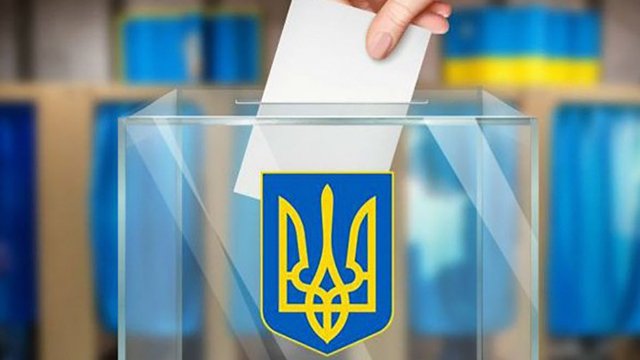
Only 10% of Ukrainians believe that elections should be held before the ceasefire (in September – 11%), according to the data of a sociological survey conducted by the Kyiv International Institute of Sociology (KIIS) from November 26 to December 29, 2025.
"In the event of a ceasefire and security guarantees, 23% support holding elections (there is a tendency for the indicator to increase – yes, during the year from March to December the indicator increased from 9% to 23%)," says the KIIS report on the results of the study on Monday on the website.
At the same time, the majority – 59% (in September – 63%) – continue to insist that elections are possible only after a final peace agreement and a complete end to the war.
Among those who trust Ukrainian President Volodymyr Zelenskyy, the vast majority is in favor of holding elections only after a final peace agreement (and only 3-4% believe that elections should be held right now, even before the end of hostilities).
Among those who do not trust the president, there is a differentiation of views. Those who "rather" do not trust the president also mostly (61%) postpone the issue of elections until after the final peace agreement, and only 11% want elections before the end of hostilities (and another 22% consider it advisable to hold them after a ceasefire with security guarantees).
And only among those who "completely" do not trust Zelenskyy, the demand for elections in the near future is quite significant. Thus, among them, 28% insist on elections in the near future, even before the end of the war, and 34% - after a ceasefire with security guarantees (34% say about elections after a final peace agreement).
Sociologists note that among those who believe that Ukraine is moving towards authoritarianism, the demand for elections is indeed higher, but at the same time half (46%) also postpone the elections until after the final peace agreement, and only 22% insist on elections as soon as possible, even before the end of the war.
KIIS regularly monitors the question of how Ukrainians perceive the fight against corruption in Ukraine. According to the results of the latest study, sociologists record that public sentiment on this issue has practically not changed. The majority of Ukrainians – 57% (in September-early October – 56%) – continue to believe that there are indeed attempts to fight corruption in Ukraine and there are positive developments. At the same time, they hold the opinion that Ukraine is hopelessly corrupt – 35% (previously it was 40%).
When asked whether Ukraine is moving towards democracy or, conversely, towards authoritarianism in December 2025, Ukrainians answered as follows. Over the past six months, the number of those who could not decide on their opinion has increased from 9% to 24%. As a result, there have been fewer of those who say that Ukraine is moving towards democracy (from 50% to 42%), and those who talk about a movement towards authoritarianism (from 41% to 34%). In any case, the advantage of those who see a movement towards democracy remains (as before), although the share of those who see a movement towards authoritarianism remains significant.
Executive Director of KIIS Anton Hrushetsky commented on the results of the study: "Despite the fact that 2025 was full of events that were not always optimistic for the authorities, the majority of Ukrainians continue to trust Zelenskyy and he remains the legitimate head of state. Moreover, at the end of 2025, trust indicators are even slightly higher than they were at the end of 2024."
From November 26 to December 29, 2025, KIIS conducted its own all-Ukrainian public opinion poll "Omnibus", to which, on its own initiative, it added questions related to trust in President Zelenskyy, the holding of national elections, the perception of the fight against corruption in Ukraine, and the country’s movement towards democracy. 1,001 respondents were surveyed using the method of telephone interviews (computer-assisted telephone interviews, CATI) based on a random sample of mobile phone numbers (with random generation of phone numbers and subsequent statistical weighting) in all regions of Ukraine (the territory controlled by the Government of Ukraine).
The survey was conducted with adult (aged 18 and older) citizens of Ukraine who, at the time of the survey, lived in the territory of Ukraine controlled by the Government of Ukraine. The sample did not include residents of territories temporarily not controlled by the Ukrainian authorities (at the same time, some of the respondents are IDPs who moved from the occupied territories), and the survey was not conducted with citizens who left abroad after February 24, 2022. Formally, under normal circumstances, the statistical error of such a sample (with a probability of 0.95 and taking into account the design effect of 1.3) did not exceed 4.1% for indicators close to 50%, 3.5% for indicators close to 25%, 2.5% for indicators close to 10%, 1.8% for indicators close to 5%.