
Poroshenko says no sanctions justification provided over year despite 15-day legal timeframe
MP of Ukraine, leader of the European Solidarity party Petro Poroshenko stated that during the year no justifications for the imposition of sanctions against him, imposed by decree of President of Ukraine Volodymyr Zelenskyy, have been received.
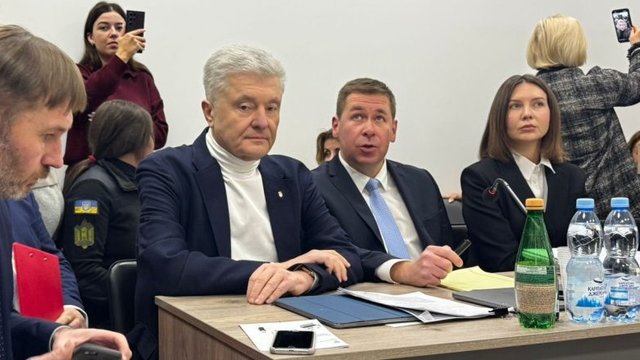
"The stage of providing, analyzing and evaluating evidence has been completed. Today we have come to amazing conclusions. An illegal, unconstitutional, extrajudicial decree has existed for a year, restricting my rights as a citizen, as a MP, my rights as an opposition leader – and in a year the authorities have not been able to provide a single piece of evidence. The only thing they tried to prove is that the president does not need evidence," Poroshenko said during a break in the meeting of the Board of Judges of the Cassation Chamber of the Supreme Court, which on Friday continued the consideration of his lawsuit to revoke the decree on sanctions.
The politician said "the Code of Administrative Procedure gives them 15 days, during which they must provide irrefutable evidence," which was never done, but a decree on sanctions introduced without a court decision and legal grounds cannot be revoked for such a long time.
He also expressed his belief that the imposition of sanctions against him is allegedly related to the preparation of government representatives for elections, despite the fact that holding them during martial law is illegal.
"The key goal of the sanctions is to prevent opponents from participating in the elections. I want to emphasize that elections during martial law are illegal because they create conditions for manipulation by the government. Elections without opposition leaders are illegal because they do not allow citizens to freely express their will. And this definitely does not coincide with our movement towards the European Union," Poroshenko said.
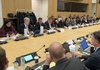
The political party said on their website that the court session on Friday was held in a room that was unable to accommodate the participants, listeners of the trial, and the media, and "representatives of diplomatic missions were forced to sit on window sills."
The session was adjourned until March 6.